Abstract
The 1746 Series is widely recognized in industrial automation environments for its reliability, modular architecture, and adaptability in complex control systems. This article explores how the 1746 Series enhances operational efficiency, reduces downtime, and supports scalable industrial applications. It also examines configuration practices, installation considerations, and maintenance strategies that help users maximize system value. Designed for engineers, procurement managers, and system integrators, this guide delivers practical insights to solve real-world automation challenges.
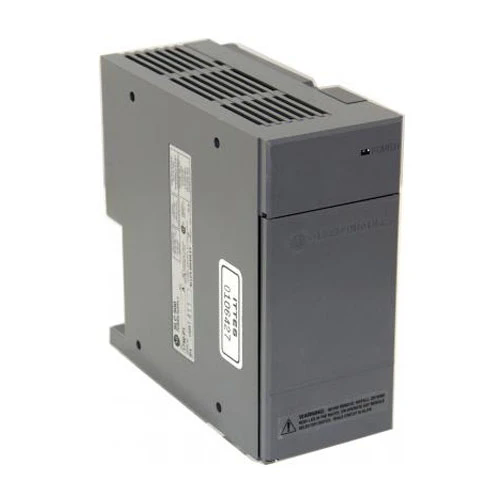
1. 1746 Series Overview
The 1746 Series is a modular programmable controller platform designed for industrial automation systems requiring stability and flexibility. It is commonly deployed in manufacturing lines, process control systems, and machinery automation environments where reliability is critical.
One of its defining strengths is its ability to integrate multiple I/O modules into a unified control rack, enabling engineers to tailor configurations according to system complexity. This modularity reduces unnecessary hardware investment while improving scalability.
2. System Architecture and Core Design
The architecture of the 1746 Series is built around a backplane-based chassis that supports communication between the processor and I/O modules. This structure allows fast data exchange and predictable system behavior, even under high-load industrial conditions.
-
Backplane communication: Ensures synchronized data transfer between modules.
-
Modular slots: Allow flexible configuration of analog, digital, and specialty modules.
-
Processor unit: Handles logic execution and system coordination.
-
Power supply integration: Stabilizes voltage across all components.
Zhenmai integrates the 1746 Series into various automation solutions, ensuring optimized performance in demanding environments where precision control is essential.
3. Key Features and Functional Advantages
The 1746 Series provides several technical advantages that directly address industrial pain points such as downtime, configuration complexity, and system scalability.
-
High reliability: Engineered for continuous operation in harsh industrial environments.
-
Scalable architecture: Supports expansion without redesigning the entire system.
-
Flexible I/O options: Compatible with digital, analog, and specialty modules.
-
Efficient diagnostics: Built-in fault detection reduces troubleshooting time.
-
Cost optimization: Modular design minimizes unnecessary hardware usage.
These features make the system especially suitable for industries requiring consistent uptime and predictable automation behavior.
4. Industrial Applications
The 1746 Series is widely used across multiple industries due to its adaptability and robustness.
-
Automotive assembly lines
-
Food and beverage processing systems
-
Water treatment facilities
-
Packaging machinery control systems
-
Material handling automation
In each application, the system plays a key role in ensuring synchronized operations, minimizing human error, and maintaining production consistency.
5. Selection and Configuration Guide
Selecting the correct configuration for a 1746 Series system depends on operational requirements such as input/output count, communication protocols, and environmental conditions.
|
Requirement
|
Recommended Configuration
|
Benefit
|
|
Small-scale automation
|
Basic CPU with minimal I/O modules
|
Cost-efficient deployment
|
|
Medium complexity systems
|
Expanded I/O with communication modules
|
Balanced performance and scalability
|
|
High-demand industrial lines
|
Full rack configuration with redundancy
|
Maximum reliability and uptime
|
Zhenmai provides tailored configuration support to ensure each deployment matches operational demands precisely.
6. Installation Best Practices
Proper installation is essential for achieving optimal performance from the 1746 Series. Incorrect wiring or poor grounding can lead to communication errors or system instability.
-
Ensure stable DIN rail mounting to reduce vibration impact.
-
Maintain adequate ventilation for thermal control.
-
Separate high-voltage and low-voltage wiring paths.
-
Verify all module seating before powering the system.
Following these guidelines significantly reduces commissioning issues and improves long-term reliability.
7. Troubleshooting and Diagnostics
The 1746 Series includes diagnostic indicators that assist engineers in identifying system faults quickly.
-
Power LED status: Indicates power supply integrity.
-
Fault indicators: Signal module-level or system-level errors.
-
Communication alerts: Highlight network or backplane issues.
Common issues include loose connections, incompatible modules, or configuration mismatches. Systematic diagnostic checks help isolate and resolve these problems efficiently.
8. Maintenance Strategies
Routine maintenance ensures long-term performance stability of the 1746 Series systems. Preventive maintenance is preferred over reactive repairs.
-
Inspect wiring integrity every 3–6 months
-
Clean modules to prevent dust accumulation
-
Monitor system logs for early fault detection
-
Replace aging power supplies proactively
Zhenmai recommends structured maintenance schedules to extend system lifespan and minimize unexpected downtime.
9. Comparative Performance Table
|
Feature
|
1746 Series
|
Conventional PLC Systems
|
|
Modularity
|
High flexibility
|
Limited expandability
|
|
Diagnostics
|
Advanced built-in tools
|
Basic indicators only
|
|
Scalability
|
Excellent
|
Moderate
|
|
Downtime reduction
|
High efficiency
|
Average
|
10. Frequently Asked Questions
Q1: What industries commonly use the 1746 Series?
It is widely used in manufacturing, water treatment, packaging, and process automation industries.
Q2: Can the system be expanded after installation?
Yes, its modular design allows additional I/O and communication modules to be integrated easily.
Q3: What is the main advantage of the 1746 Series?
Its combination of reliability, modularity, and diagnostic capability makes it highly efficient for industrial control systems.
Q4: How often should maintenance be performed?
Preventive maintenance is recommended every 3 to 6 months depending on operating conditions.
11. Conclusion
The 1746 Series remains a strong choice for industrial automation due to its flexible architecture, robust performance, and ease of maintenance. By integrating this system, organizations can achieve higher operational stability, reduced downtime, and improved scalability across diverse applications.
Zhenmai continues to support industrial clients with reliable automation solutions built around the 1746 Series, ensuring efficient system integration and long-term performance optimization.
If you are looking to optimize your automation system or require customized configuration support, contact us at Zhenmai today for professional consultation and tailored solutions.